
Introducing the Diamond Reds Top 50 Prospect Rankings

After months of internal evaluation, live looks, data review, and ongoing discussion, Diamond Reds is officially publishing its Top 50 Cincinnati Reds prospect list. While this is the first public release, this ranking process has been active behind the scenes for multiple seasons, evolving alongside player development trends and our own scouting philosophy.
This list blends traditional scouting with modern evaluation tools. We weigh age-to-level performance, underlying data indicators, physical projection, risk profile, and role probability. The goal isn’t simply to rank players by ceiling, but to contextualize likelihood — balancing upside with realistic paths to major league impact. Prospect evaluation is fluid, but to create consistency, the Top 50 will receive three primary updates each year: a spring edition ahead of Opening Day (including new international signings), a summer refresh following the MLB Draft, and a winter update after the Rule 5 Draft reshapes roster landscapes.

Evaluation, however, never stops. We are constantly tracking performance, development trends, and role changes throughout the season. While major reshuffles will align with those three checkpoints, the board will evolve as prospects graduate to the major leagues — with new names backfilling open spots to maintain a full Top 50 at all times.
In this release, we’ll walk through how the board is constructed, the biggest risers and fallers from our internal iterations, and the standout tools that separate certain prospects from the pack. This is meant to be a living document — one that tracks growth, volatility, and the long-term arc of the Reds’ system.
How the Board Started & What We Value
The Diamond Reds Top 50 began in the spring of 2024 as a private evaluation exercise — a structured attempt to track the organization’s minor league talent with greater consistency and accountability. What started as an internal spreadsheet quickly evolved into a full ranking model, tracking acquisition history, biographical data, performance trends, and role projection. This release marks our seventh official ranking cycle, though it is the first edition being published publicly.
From the outset, the goal was structure and transparency. Each player entry includes a written evaluation, date of birth, position, handedness, acquisition method, and physical measurements. Rather than relying heavily on traditional 20–80 tool grades, we emphasize contextual analysis — explaining why a player sits where he does on the board. As the database continues to grow, year-over-year tracking and performance trends will play an increasingly important role in movement within the rankings.
Our primary evaluation framework centers on six pillars: game film, physical projection, data indicators, minor league or amateur performance, risk profile, and projected major league role. Ceiling is important, but probability carries equal weight. We evaluate not only what a player could become, but how realistic the path is to eventually impacting the Reds’ major league roster. Age relative to level, skill growth patterns, and long-term role sustainability all factor into placement.
To maintain consistency, players must meet defined prospect qualifications at the time of ranking. Position players must have fewer than 130 career Major League at-bats, and pitchers must have thrown fewer than 50 Major League innings. Additionally, players must have spent fewer than 45 total days on an active Major League roster and be under 28 years old. Once those thresholds are surpassed, a player graduates from the list, creating room for emerging talent to enter the Top 50.
This framework allows the rankings to function as a living evaluation of the system — grounded in repeatable standards while remaining flexible enough to reflect growth, volatility, and changing opportunity.
Movement Within the System
Every ranking cycle produces volatility. Development is rarely linear, and internal shifts often reflect role clarity, skill growth, or stalled progression more than surface-level statistics. This edition is no different.
Among the most notable risers are Jaset Martinez, Liberts Aponte, Adolfo Sanchez, and Jose Franco. Each has strengthened his profile in different ways. Martinez has shown meaningful progress in refining his offensive approach, tightening swing decisions while maintaining impact potential. Aponte’s upward movement reflects improving physicality and skill stability, with indicators suggesting more sustainable production. Sanchez has built momentum through tangible performance growth and a clearer defensive outlook, while Franco’s development trajectory — particularly in how his underlying traits translate against better competition — has improved his long-term role probability. In each case, the rise is less about short-term spikes and more about increasing confidence in eventual major league utility.
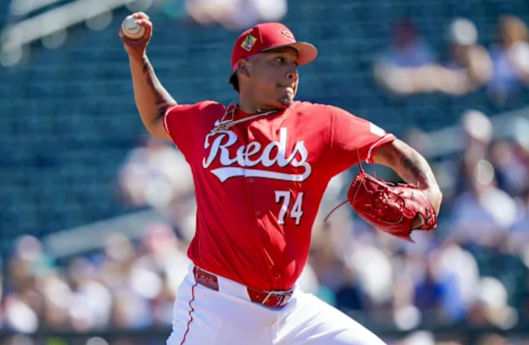
On the other side of the board, Jose Acuna, Ricky Cabrera, Luis Mey, and Cole Schoenwetter represent the most significant downward movement since our previous internal iteration. In some cases, it’s a matter of stalled development or performance inconsistency. In others, the shift reflects elevated risk relative to peers progressing more quickly. Prospect status is fluid, and movement down the board does not eliminate upside — but it does reflect growing questions surrounding role certainty, durability, or skill translation at higher levels.
These swings underscore the broader philosophy of the list: the Top 50 is not a static snapshot of talent, but a probability-weighted assessment of future impact. As players clarify their strengths — or expose limitations — the board adjusts accordingly.
Standout Tools in the System
Beyond overall rankings, certain players separate themselves through individual carrying traits. These tools often shape ceiling outcomes and, in many cases, drive upward movement within the system.
Luis Mey owns the best fastball in the organization, pairing premium velocity with life that allows the pitch to overpower hitters when located. Rhett Lowder stands out twice among the system’s arms — his slider is the most advanced secondary offering in the organization, consistently missing bats with late bite, and his overall command gives him the most polished strike-throwing profile among upper-level starters. The ability to both land and finish pitches in different quadrants raises his probability of sticking in a rotation role.
On the offensive side, Tyson Lewis and Arnaldo Lantigua share the distinction for best raw power, each capable of producing impact contact that projects comfortably to game settings as their approaches mature. Hector Rodriguez shows the best pure hit tool in the system, demonstrating advanced bat-to-ball skills and barrel control. Sal Stewart’s plate discipline separates him from many peers, with swing decisions and zone awareness that support long-term offensive stability.

Defensively, Edwin Arroyo is the system’s premier infield defender, combining instincts, internal clock, and range that project to sustain value at a premium position. Jay Allen brings the strongest defensive profile among outfielders, covering ground with speed and athleticism that translate to center field impact. Behind the plate, Connor Burns — though just outside the Top 50 — stands as the organization’s best defensive catcher, offering advanced receiving and game management traits. Steele Hall earns recognition as the system’s best overall athlete, with twitch, explosiveness, and physical projection that give him one of the more dynamic long-term profiles in the organization.
Highlighting these traits provides context beyond numerical ranking. Individual carrying tools often dictate development arcs, and in several cases, they are the foundation for future movement on the board.
The State of the System
Overall, the Reds’ farm system remains deep and functional, though it no longer carries quite the same national shine it did in recent seasons. A wave of recent graduations — including Chase Burns, Elly De La Cruz, and Noelvi Marte — has naturally thinned the very top tier of prospect capital. That attrition reflects organizational success more than decline, but it does reshape the structure of the current board.
The upper tier of this list leans more hitter-heavy, a reflection of both available talent and risk modeling. Position players generally offer more stable projection paths than young pitchers, whose development curves are frequently interrupted by injury volatility. That weighting is intentional. While the system still features intriguing arms, hitters presently provide clearer probability when projecting future major league impact.
Depth across the organization is relatively well distributed rather than concentrated in one narrow window. Sal Stewart, Zach Maxwell, and Rhett Lowder are all positioned to graduate in the near future, which will further transition the system toward its next wave. Much of that emerging wave resides in the lower levels, with Low-A Daytona standing out as the strongest affiliate in terms of upside and developing talent.
As with any prospect list, this is a snapshot in time. Graduations, breakouts, and setbacks will continue to reshape the board. The objective is not to deliver verdicts, but to track trajectory — identifying which players are moving closer to impacting the Reds’ major league roster and how the system evolves as that transition unfolds.


Comments